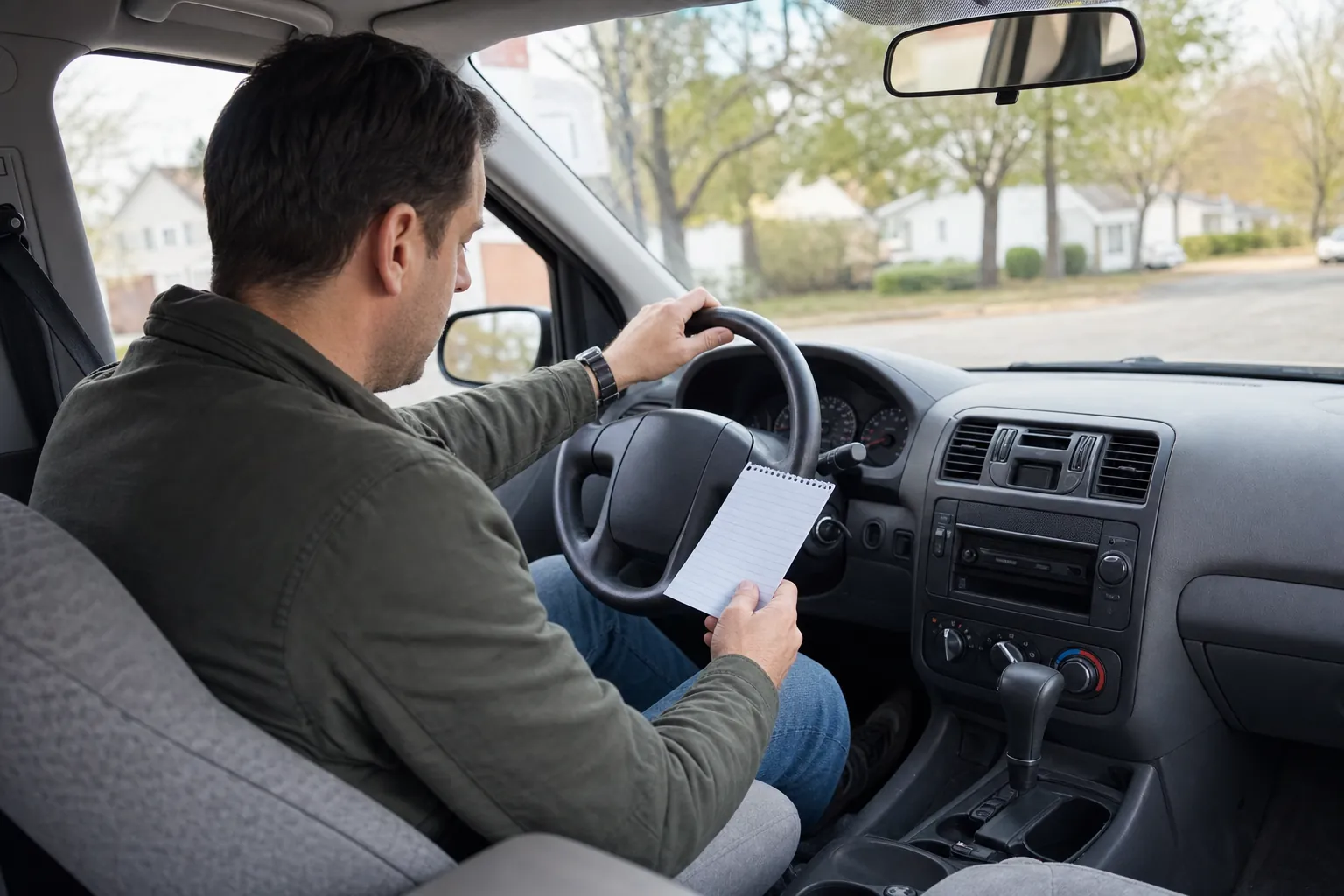
A used-car test drive is your chance to find out whether the vehicle feels as sound as the listing makes it look. It is not a mechanic's inspection, and it will not prove that a car has no hidden problems. It can, however, help you spot the questions that need a better answer before you get attached to the vehicle.
Give yourself enough time to start the car, use the controls, drive on more than one kind of road, and notice what changes as the vehicle warms up. Keep the radio off for part of the drive. Pay attention to sounds, smells, vibrations, warning lights, and anything that does not match the seller's description. You are not trying to diagnose the problem from the driver's seat. You are deciding whether the car deserves the next step.
Prepare before you turn the key
A useful test drive starts before the vehicle moves. Ask whether the engine is cold, especially if you are meeting a private seller or visiting early at a dealership. A cold start can reveal rough idle, smoke, warning lights, or noises that may be less obvious after the car has been running. If the seller has already warmed it up, do not assume there is a problem, but ask why and make a note of it.
Bring your phone for notes and photos, and save the vehicle identification number. Before you drive, compare the listing's mileage, trim, price, and stated condition with the car in front of you. The questions to ask when buying a used car can help you cover the title, history, maintenance, and pricing details that a drive alone cannot answer.
Plan a route that includes normal streets, a few turns, a safe stop, rougher pavement, and a highway-speed stretch when practical. A short loop around a parking lot is enough to check basic visibility, but it will not tell you how the car behaves under acceleration, at speed, or when braking from more than a crawl.
Check the cabin and controls while parked
Before the drive, sit where you will normally sit. Adjust the seat and mirrors, fasten the seat belt, and make sure you can see clearly in every direction. Turn on the climate system, headlights, turn signals, wipers, windows, locks, horn, camera, charging ports, and any feature that matters to your daily use. Small problems are still part of the value conversation.
When you start the car, watch the instrument panel. Many warning lights appear briefly as part of the startup check and should go out once the engine is running. A light that stays on deserves a specific explanation and, if you continue, an independent diagnostic check. Do not accept a casual promise that a light is harmless when the seller cannot show a repair record or invoice.

Listen and feel the first few minutes
Begin with the radio off and the windows up. Notice whether the engine starts promptly and settles into a smooth idle. A used car does not have to be silent, but you should not ignore a hard start, repeated clicking, a heavy fuel smell, smoke, a shaking idle, or a warning message. These may have an ordinary explanation, but they are exactly the kind of detail you want written down for a mechanic.
As you pull away, pay attention to how the transmission engages, whether the steering wheel feels centered, and whether the car tracks straight on a level road. A small correction for road crown is normal. Persistent pulling, a crooked steering wheel, vibration, or a clunk as you accelerate can point to tires, alignment, suspension, drivetrain, or prior repair work that needs a closer look.
Use a route that tests the vehicle, not just your patience
Build speed gradually and pay attention to how the car responds. Acceleration should feel predictable rather than hesitant, surging, or accompanied by loud knocking, whining, or rattling. If the vehicle has an automatic transmission, shifts should be reasonably smooth. A delay, flare in engine speed, harsh shift, or repeated shudder is worth noting, even when it happens only once.
Take a few normal turns and listen for changes in sound. A clunk over a bump, a clicking noise during a tight turn, or a hum that gets louder with road speed can help an inspection shop focus its work. Do not make abrupt maneuvers or try to recreate a problem in an unsafe way. A calm route gives you more useful information than a dramatic one.
At a safe highway speed, notice wind noise, steering stability, engine behavior, and vibration through the wheel or seat. The car should not wander, shake, or make you work harder than expected to hold a lane. If you cannot include highway driving, say so before you agree to buy and consider whether another drive or inspection can fill that gap.

Test the brakes without creating a scene
Find a safe, open place to brake normally from more than parking-lot speed. The car should slow in a straight, controlled way. Notice whether the pedal feels firm, whether the vehicle pulls to one side, and whether you feel vibration through the pedal or steering wheel. Grinding, squealing that continues, a soft pedal, strong vibration, or a pull can mean the brakes or related parts need professional attention.
Do not perform a panic stop to prove a point. You are evaluating a vehicle, not testing the limits of the road around you. One or two normal, deliberate stops tell you far more than an unsafe maneuver. If something feels unusual, write down the speed, road condition, and what you felt. That detail is more useful than a vague memory later.
Look for clues after the drive
After parking, leave the car running for a moment with the radio off. Listen again for idle changes, cooling fans, or noises that appeared once the engine warmed up. Check for warning lights, unusual smells, and fluid leaks beneath the vehicle. Clear water from air conditioning can be normal. Dark oil, colored coolant, or a fuel smell needs a direct explanation.
Walk around the car one more time. Check that the tires look evenly worn, the lights work, and no new smoke or odor has appeared. The used-car inspection checklist gives you a fuller walk-around process, including the paperwork, body condition, tires, water damage clues, recalls, and price details that should sit beside the test-drive notes.
Then write down what you noticed while it is still fresh: how the car started, any warning lights, steering behavior, brake feel, shift quality, noises, smells, control issues, and questions the seller could not answer. You do not need a complicated scorecard. A short, honest list makes it much easier to compare two vehicles or explain your concerns to a shop.
Know which test-drive red flags deserve a pause
One minor concern does not automatically make a used car a bad choice. Normal wear, an aging battery, or a small control repair can be understood and priced into the decision. The important question is whether the seller's explanation, the vehicle's records, and your experience on the road make sense together.
Pause when the car will not start cleanly, warning lights stay on, the engine overheats, the transmission slips or shudders, the vehicle pulls hard, the brakes feel unsafe, or you smell fuel, burning oil, or mildew. The same applies when the seller dismisses something you noticed without offering a clear record or allowing a mechanic to inspect it. You do not need to accuse anyone or make a final decision in the parking lot. You simply need the time and information to find out what the concern means.
Be careful with pressure, too. A seller who says another buyer is waiting may be telling the truth. That does not turn an incomplete inspection into a complete decision. A vehicle that is right for you should still make sense after a title check, history review, test drive, written price, and independent inspection.
Let the test drive guide the inspection
A test drive is not a substitute for a pre-purchase inspection. It is how you decide whether the car has earned one. The Federal Trade Commission advises used-car shoppers to arrange an independent inspection before purchase. Give the shop your notes and ask them to check the areas that felt different: a vibration when braking, a delayed shift, a noise over bumps, a warning light, or a smell after the drive.
Use a vehicle history report and VIN recall check alongside that inspection. The U.S. Department of Justice's National Motor Vehicle Title Information System explains how buyers can access title, brand, and certain history information through approved providers. The National Highway Traffic Safety Administration also provides a free VIN recall lookup. Neither one replaces a mechanical inspection, but both can give you important questions to ask before money changes hands.

Compare the drive with the price and the whole offer
A car that drives well may still be the wrong deal, and a concern found on the drive may be manageable at the right price. The key is to keep the vehicle's condition, repair needs, purchase price, financing, trade-in value, and optional products visible as separate decisions. Ask for the out-the-door price in writing before you judge the offer by its monthly payment.
The Consumer Financial Protection Bureau's auto loan resources explain the information buyers should compare, including the annual percentage rate, loan term, amount financed, and total cost. Use that information with your test-drive and inspection notes. A lower payment may come from a longer loan, while a lower asking price may leave you paying for tires, brakes, or maintenance soon after delivery.
The used-car mileage guide can help you compare the odometer with condition and records. The guide to timing a used-car purchase can help you avoid letting an end-of-month deadline make the decision for you. Each part of the process should support the same conclusion: the vehicle, the evidence, and the final deal make sense together.
Bring the real details to Bill before you decide
Bill Flower brings more than 33 years of dealership experience to the details that can get blurred once you find a vehicle you like. A test-drive note, inspection report, listing, history report, and dealer worksheet each tell part of the story. Putting them together can make the next step clearer before excitement or pressure turns into a signature.
If you have a used car or offer in front of you, the Used Car Buying Service and a free consultation give you a direct way to talk through the vehicle, the questions still open, and the best next move. The goal is not to make every car purchase harder. It is to make sure the one you choose earns your confidence.
Before You Commit
Have a test-drive concern or a written offer in front of you?
Bring the listing, your notes, inspection findings, and the written numbers to a free consultation with Bill.
Frequently asked questions
How long should I test drive a used car?
Drive long enough to experience a cold start when possible, neighborhood streets, turns, braking, rough pavement, and a safe higher-speed stretch. Ten minutes around one block is usually not enough to notice how the vehicle steers, shifts, stops, and settles once you are no longer focused on the first impression.
What should I look for during a used car test drive?
Notice how the car starts, idles, accelerates, shifts, tracks straight, brakes, turns, and responds over rough pavement. Also test the controls you will use, watch for warning lights, and listen with the radio off for noises that change with speed, turning, or braking.
Can I test drive a used car without buying it?
Yes. A test drive is a normal part of evaluating a used vehicle. You should be able to ask for a route that includes the conditions you need to check and take notes afterward. A promising vehicle should also be available for an independent pre-purchase inspection before you sign.
Should I get a mechanic to inspect a used car after a test drive?
Yes. A test drive can reveal questions, but it cannot show every concern. An independent mechanic can inspect the underbody, brakes, tires, fluids, diagnostic codes, collision repairs, and maintenance needs that are difficult to judge from the driver's seat.
Related posts
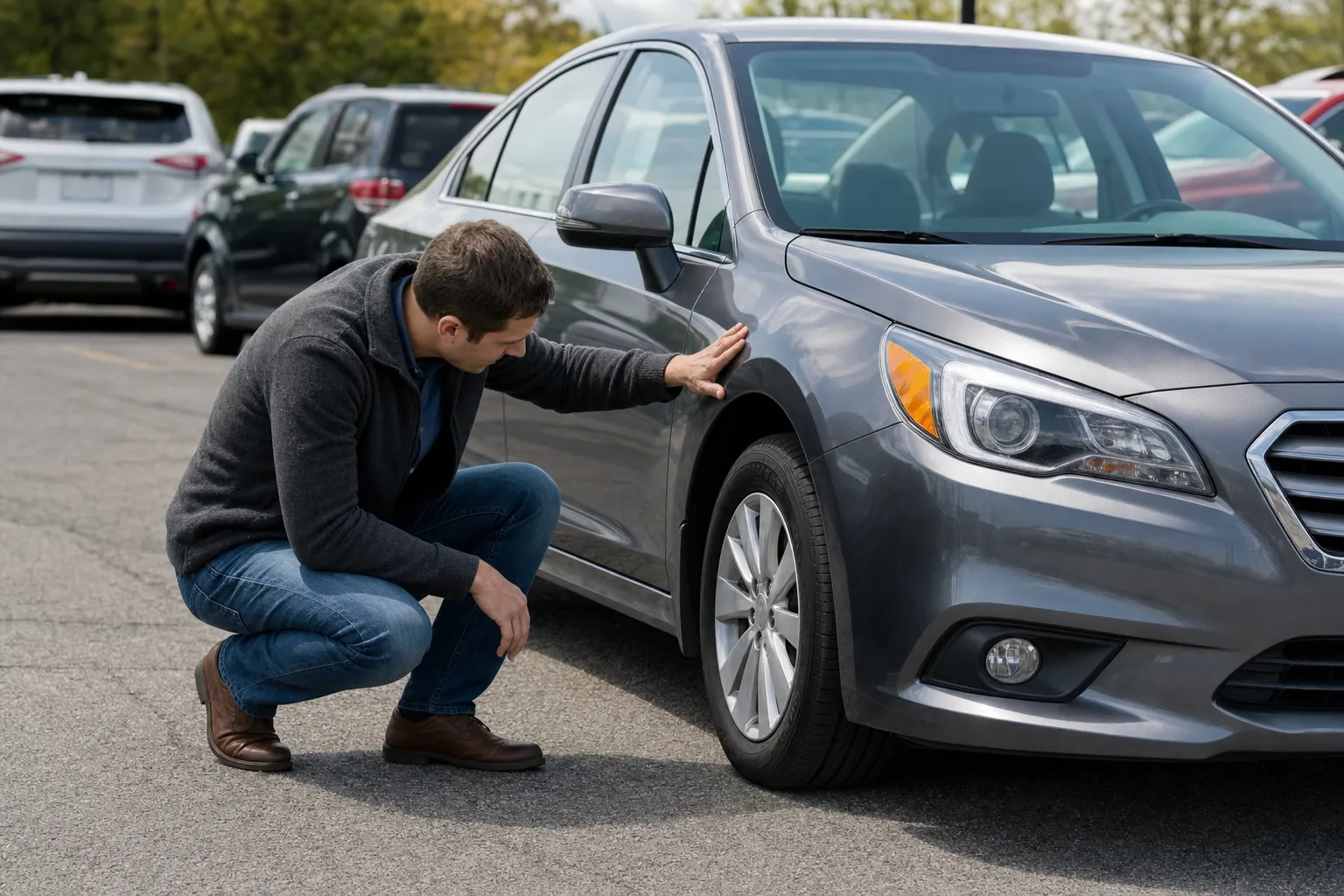
Used Car Buying
Used Car Inspection Checklist: What to Check First
Use a practical inspection sequence before you commit to a used vehicle.
Read the guide →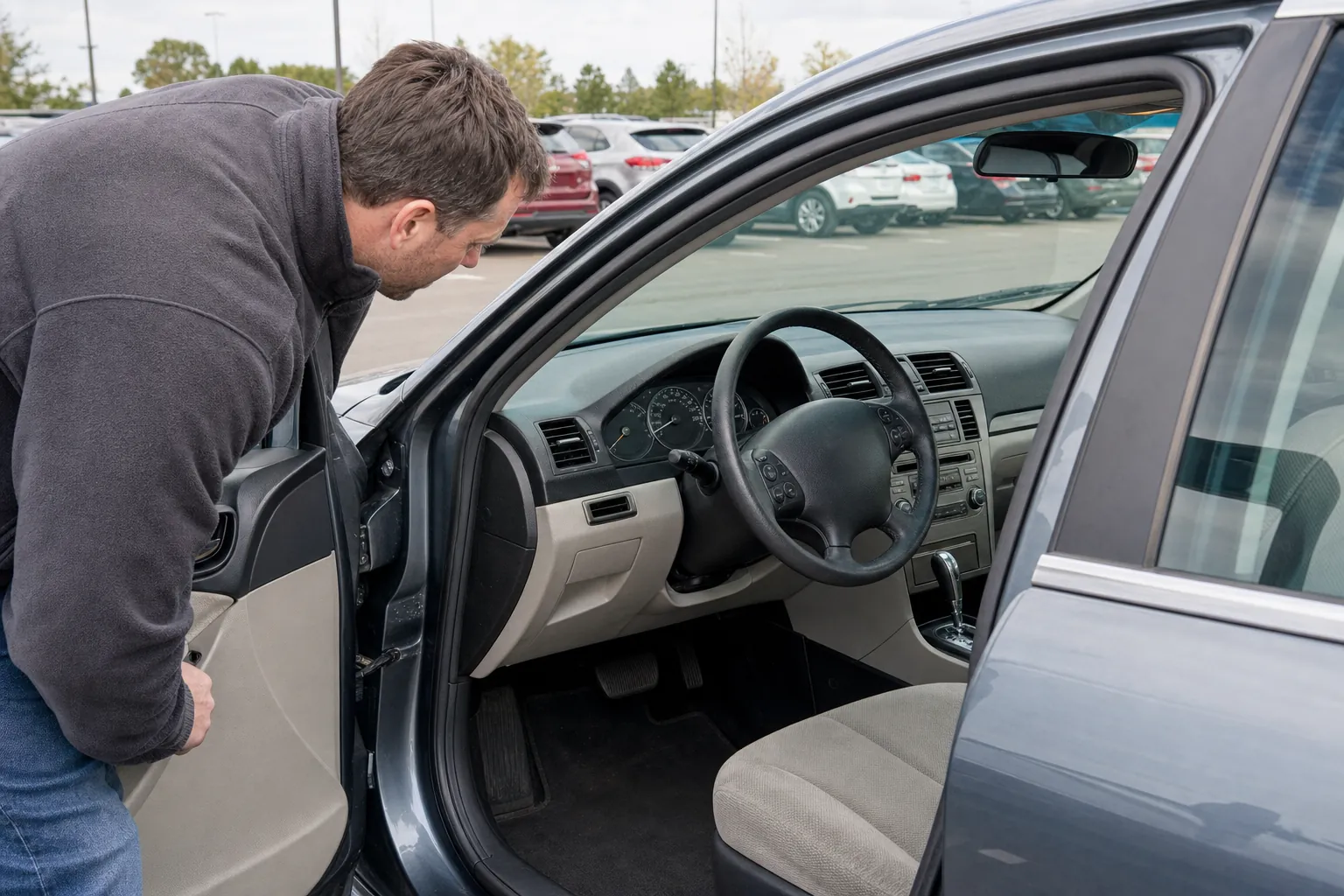
Used Car Buying
What Is Good Mileage for a Used Car?
See how mileage fits into maintenance, condition, records, and ownership cost.
Read the guide →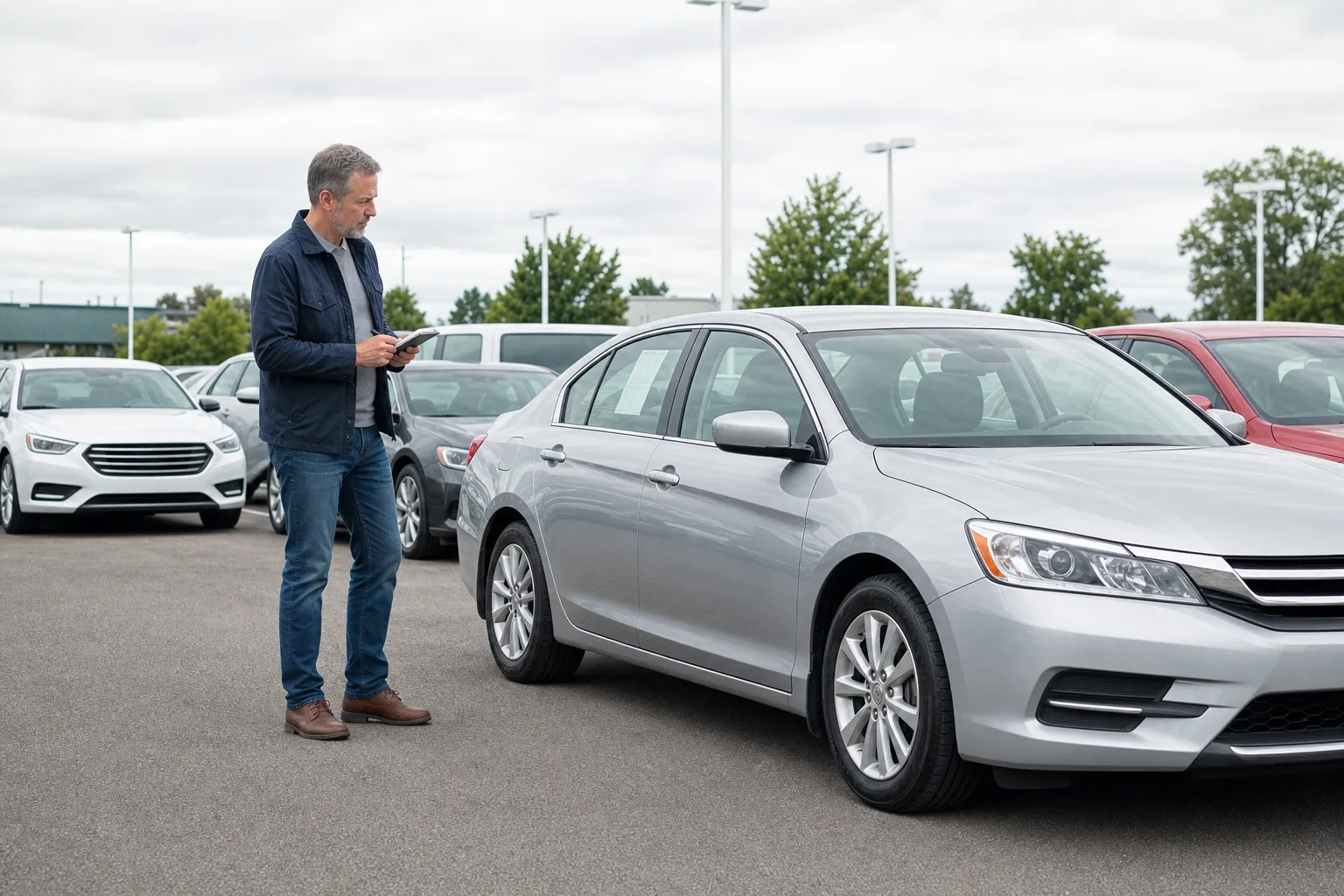
Used Car Buying
Best Time to Buy a Used Car: A Practical Guide
Use timing, selection, and the complete offer to decide when a car is worth buying.
Read the guide →