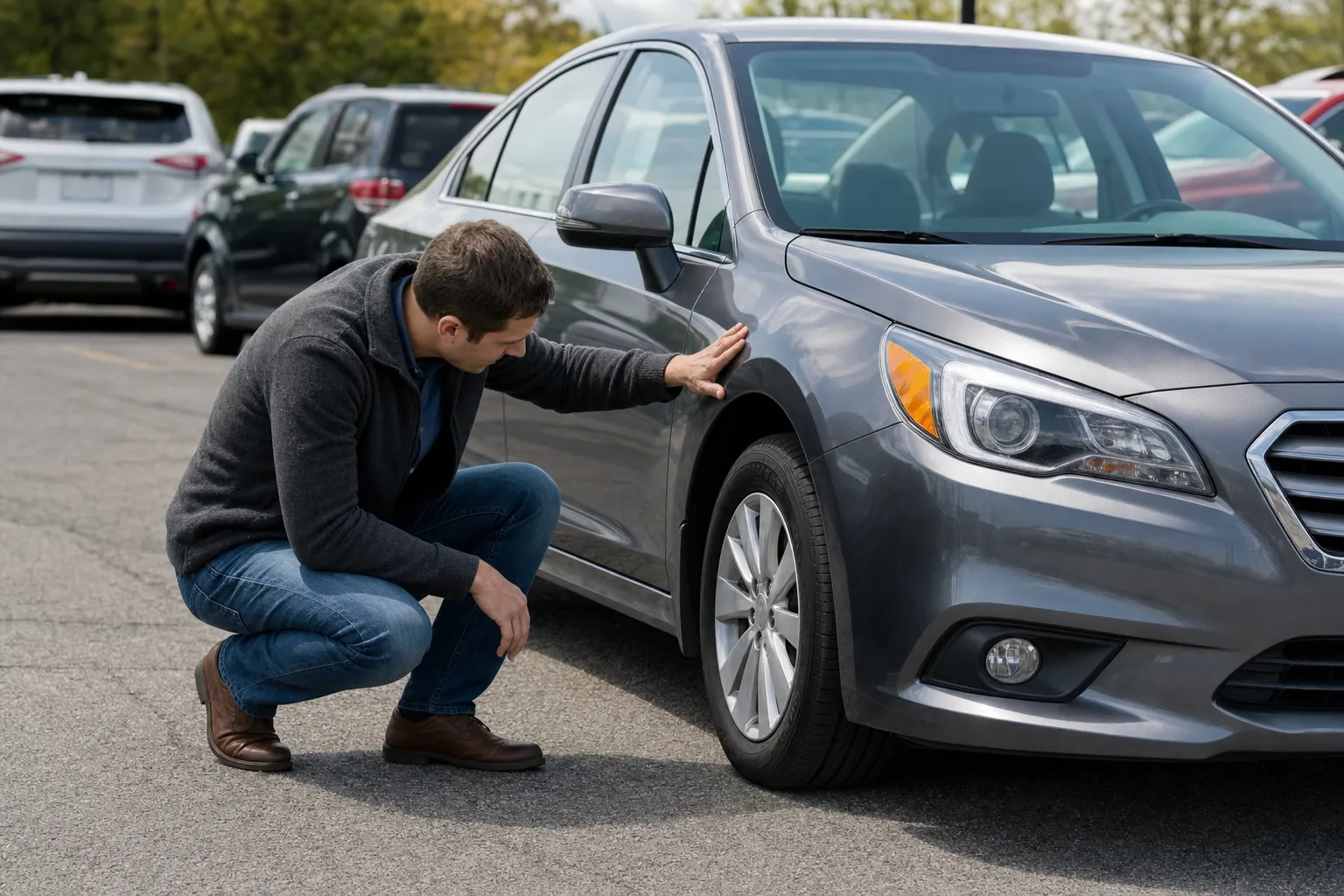
A used car inspection checklist gives you a calmer way to decide what deserves your attention before you get attached to a vehicle. You are not trying to diagnose every mechanical issue in a parking lot. You are looking for a consistent story: paperwork that matches the car, condition that matches the mileage, and a seller or dealer who is comfortable with reasonable questions.
Start before the test drive, keep notes as you go, and use what you find to decide whether the vehicle is worth an independent pre-purchase inspection. A few honest scratches are not a deal breaker. A title mismatch, a warning light, a wet interior, or a seller who refuses an inspection deserves a pause.
Bring a simple plan before you see the car
Take your phone, a flashlight, a paper towel, and a way to save the VIN. Arrive early enough to look at the vehicle before the conversation becomes about payments or trade-in numbers. If the seller says the car has been warmed up for you, ask whether you can see it after it has been sitting. A cold start can reveal noises, smoke, rough running, or warning lights that are easy to miss later.
Before you leave home, compare the listing with the vehicle's age, mileage, asking price, trim, and stated history. The used-car mileage guide can help you put the odometer in context. Bring the questions that matter at a used-car sale, too. They will keep you focused when a seller gives a reassuring but incomplete answer.
Check the title, VIN, and vehicle history first
Before you spend time admiring the vehicle, make sure the basic paperwork makes sense. Ask to see the title and compare the VIN with the number on the dashboard and the driver's door area. Confirm that the seller's name, lien information, and title status are clear. If someone else is selling the car, ask why and what documentation they have to complete the transfer.
Use a vehicle history report as a starting point, not a promise. The U.S. Department of Justice explains that the National Motor Vehicle Title Information System can help consumers access title, brand, and certain related history information through approved providers. Pay attention to salvage, rebuilt, flood, odometer, or lien records, then ask for a plain explanation of anything you do not understand.
A mismatch does not need an argument. It needs a clear answer before you go further. Do not make a deposit because a seller says the paperwork can be sorted out later.
Walk around the exterior in daylight
Start at one corner and move around the car slowly. Look along each side at eye level for waves in the paint, mismatched panels, different paint shades, or gaps that do not line up. Open and close each door, the trunk, and the hood. They should operate smoothly without a forced feel, scraping, or a need to slam them.
Check the windshield, lamps, mirrors, and roof for cracks, moisture, or damage. Look under the hood and around the trunk for odd smells, water staining, fresh overspray, or corrosion. A fresh detail is not a problem, but it should not prevent you from checking what is underneath the shine.

Inspect the tires, brakes, and signs of wear
Tires tell you a great deal about how a vehicle has been used and maintained. Check that all four match in size and type, then look for uneven tread wear, sidewall cracking, bulges, or a tire that is much newer than the others without a clear explanation. Uneven wear may be a simple alignment issue, or it may point to suspension damage or a past accident.
Look through the wheels at the brakes where you can. Rust on exposed brake parts after rain is normal. Deep grooves, heavy vibration during a drive, grinding, or a brake pedal that feels unusually soft are reasons for a professional review. Ask about recent tires, brakes, batteries, and suspension work, then compare the answers with the records.
When you see wear, do not ask whether the vehicle is perfect. Ask what it will cost you in the next year. That is the number that belongs in the buying decision.
Look for leaks, odors, and water damage
Before the test drive, look beneath the vehicle for fresh fluid spots. Clear water under the passenger side can be normal air-conditioning condensation. Dark oil, colored coolant, or a strong fuel smell needs an explanation. Open the trunk, lift the floor mat if possible, and check the spare-tire area for moisture, staining, corrosion, or mildew.
Inside, take a moment before someone turns on the air freshener. A musty odor, damp carpet, fogged lights, rusty seat mounts, or unexplained electrical behavior can suggest water intrusion. None of these clues proves a flood history on its own, but together they are exactly the kind of evidence an independent mechanic should inspect.
Test every control before the drive
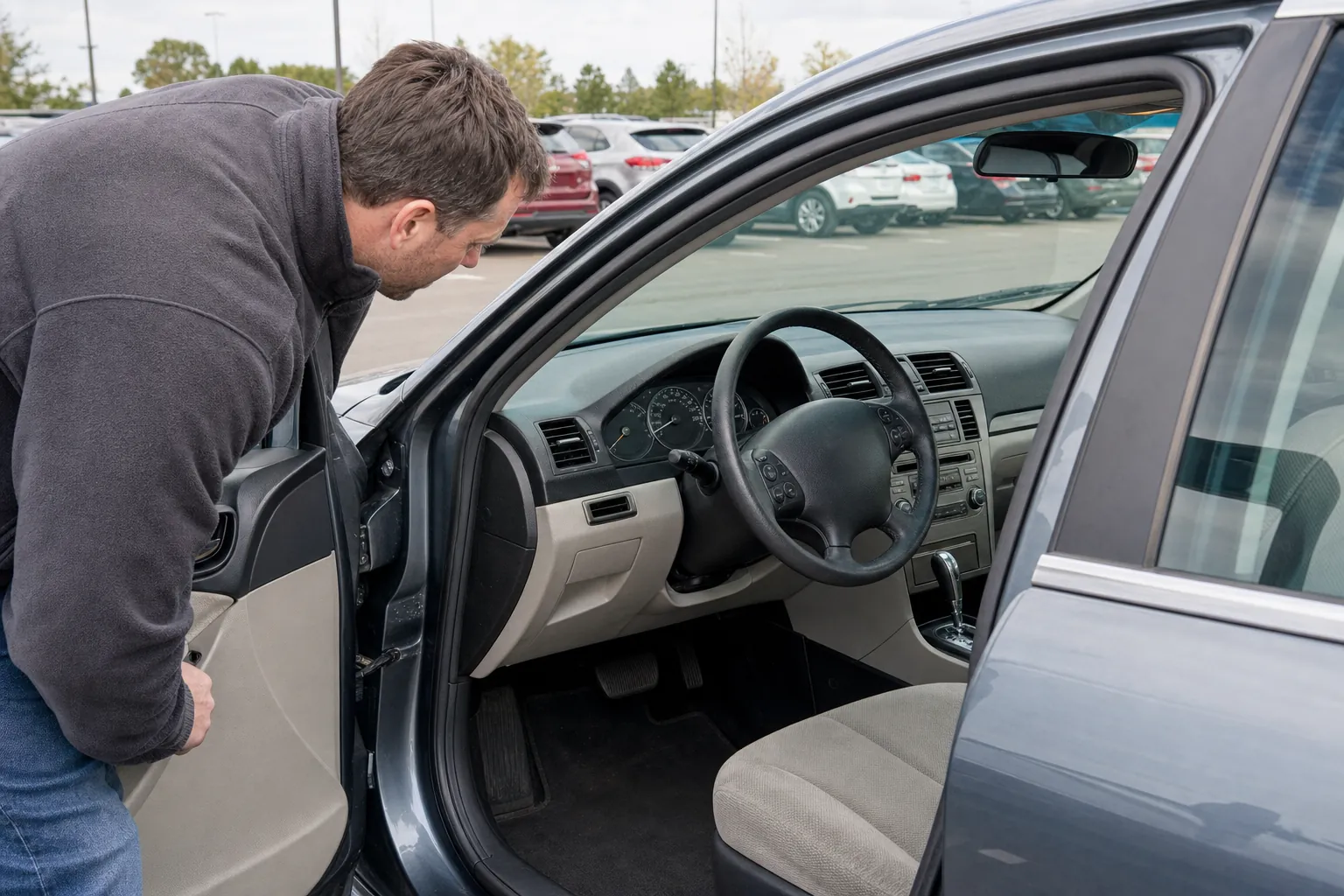
Sit in every seat you expect to use. Check the windows, locks, mirrors, seat controls, lights, wipers, horn, climate controls, camera, charging ports, and infotainment functions that matter to you. Turn the key or start button yourself and watch the dash. Warning lights should illuminate at startup and go out once the vehicle is running, unless there is a legitimate reason they remain on.
Take note of what does not work, even if it seems minor. A broken window switch or weak air conditioning may be manageable, but it changes the vehicle's value. A seller who says a warning light is harmless should be able to support that claim with a repair record or diagnostic explanation, not just confidence.

Make the test drive answer real questions
Use the test drive to check more than comfort. Drive long enough to experience a few turns, normal acceleration, braking, rough pavement, and a safe highway-speed stretch when possible. Turn off the radio for a few minutes. Listen for rattles, clunks, wind noise, whining, or a change in sound when you turn or brake.
Pay attention to whether the vehicle tracks straight, shifts smoothly, brakes without pulling, and responds predictably. If something feels off, you do not need to diagnose it in the driver's seat. Write it down. A clear list gives the inspection shop a better place to start.
For a dealer sale, also ask for the FTC Buyers Guide information and a written out-the-door price. It is much easier to compare a vehicle when the price, taxes, required fees, financing, and optional products are separated instead of folded into one monthly payment. Buyers evaluating an offer can also use the site's car negotiation help to sort through the numbers before signing.
Check recalls by VIN
Before you agree to buy, run the VIN through the National Highway Traffic Safety Administration's free recall lookup. An open recall does not automatically mean you should walk away, but you should know whether a remedy is available and whether the repair can be completed before or soon after delivery.
Recall checks are one part of a safe buying process. They do not replace your inspection, maintenance review, or test drive. Think of them as another way to make sure the vehicle's story is complete.
Use an independent pre-purchase inspection
This is the step that can save you from the expensive surprises a parking-lot check cannot reveal. An independent shop can look for leaks, collision repairs, corrosion, diagnostic codes, brake and tire condition, suspension wear, and maintenance that is due soon. The Federal Trade Commission specifically advises buyers to get an independent inspection before purchase.
Ask the seller or dealer early whether you can take the car to a shop of your choice. A reasonable inspection request is part of a serious purchase, not an accusation. If the answer is no, or if the seller creates urgency around skipping it, treat that as information. A vehicle may still be available tomorrow. Your money needs to be available for the right vehicle.

Keep a simple scorecard for every vehicle
One vehicle can feel more appealing than another because the color, trim, or salesperson makes a stronger first impression. A scorecard helps you compare facts instead of relying on that feeling. Use the same notes for every car you see: VIN and title status, asking price, out-the-door price, mileage, service records, tire condition, warning lights, test-drive observations, inspection findings, recalls, and near-term repair needs.
Mark each item as clear, needs an answer, or needs an estimate. This does not need to be complicated. A short note such as “two tires soon,” “service records through 70,000 miles,” or “shop to check vibration when braking” is enough. The point is to keep an unanswered question from disappearing once you hear a lower payment or see a freshly cleaned interior.
When you compare vehicles side by side, the one with the slightly higher asking price may actually be the better value. Complete records, healthy tires, a clean inspection, and a transparent seller can be worth more than a lower listing price followed by repairs you did not plan for. The site's Vehicle Buying Guide gives you another practical way to organize that comparison before you make an offer.
Know when to pause or walk away
Not every concern means the vehicle is a bad choice. Used cars have normal wear, and a fair price can account for maintenance that is due. The problem is not a repair need. The problem is a repair need that is hidden, minimized, or impossible to price because the story does not add up.
Pause when the VIN or title does not match, the seller cannot explain a branded title, the vehicle has clear water damage, a warning light is dismissed without evidence, or the seller refuses an independent inspection. Also pause when the deal only makes sense after you agree to an unclear fee, an optional product, or a monthly payment that hides the total cost. A polite no is cheaper than discovering an expensive problem after the paperwork is signed.
Do not let urgency turn an incomplete inspection into a complete decision. A trustworthy seller can explain the vehicle, give you time to verify it, and let the price stand on its own. If you are weighing a repair estimate or an offer that still feels confusing, contact Bill before you commit. A short conversation can be enough to make the next move clearer.
Use the inspection results to make the decision
Ask the shop for a written summary of safety concerns, major repairs, and likely near-term maintenance. Then compare that list with the asking price, history, records, and your own comfort level. Do not expect a used car to have no needs. Expect the needs to be understood and reflected in the deal.
When the findings leave you unsure, that is where experienced buying support can help. Bill Flower brings more than 33 years of dealership experience to the details that are easy to miss when you are excited about a particular car. The Used Car Buying Service and a free consultation give you a place to talk through the listing, inspection report, or offer before making a commitment.
Talk It Through With Bill
Have a vehicle or inspection report in front of you?
Bring the listing, maintenance records, inspection notes, and offer to a free consultation before you decide.
Frequently asked questions
What should I inspect before buying a used car?
Check the title and VIN, vehicle history, body condition, tires, lights, fluid leaks, cabin controls, warning lights, test-drive behavior, recall status, and the full out-the-door price. Then arrange an independent pre-purchase inspection before you commit.
Can I inspect a used car myself?
Yes. A careful walk-around and test drive can reveal useful clues about condition and how the vehicle has been treated. Your inspection should help you decide what to ask, what to document, and whether the vehicle deserves a professional inspection. It should not replace a qualified mechanic's evaluation.
What are the biggest red flags when inspecting a used car?
Red flags include a title or VIN that does not match, a seller who will not allow an independent inspection, unexplained warning lights, uneven tire wear, strong water or mildew odors, fresh paint that does not match nearby panels, fluid leaks, or pressure to sign before you receive an itemized price.
Should I get a pre-purchase inspection from a mechanic?
Yes, especially when the car is older, has higher mileage, has limited records, or represents a meaningful purchase for your budget. An independent mechanic can identify safety concerns, hidden wear, diagnostic codes, and near-term repair needs that are difficult to judge during a short test drive.
Related posts
Used Car Buying
What Is Good Mileage for a Used Car?
See how mileage fits into maintenance, condition, records, and the real cost of ownership.
Read the guide →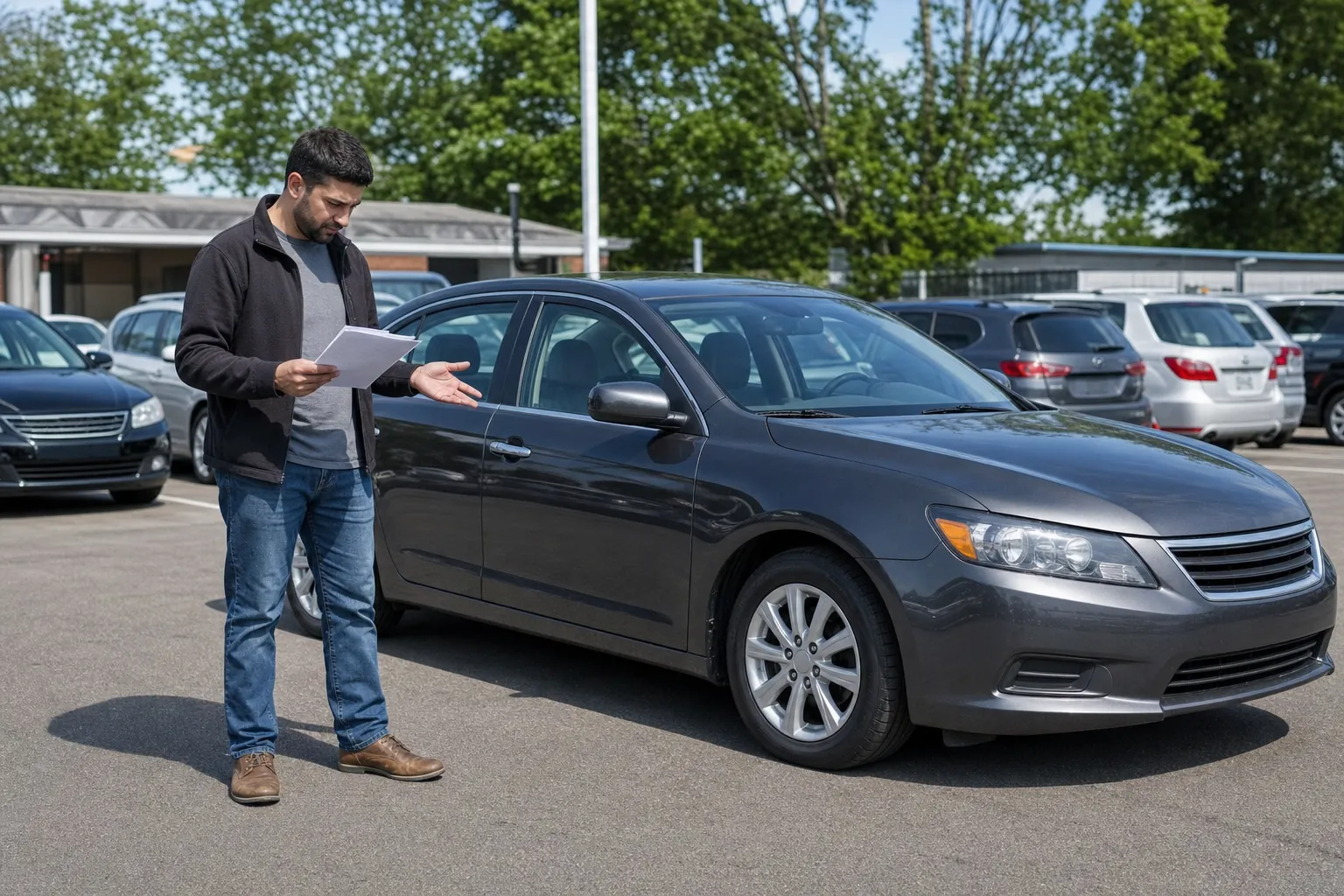
Used Car Buying
Questions to Ask When Buying a Used Car
Bring better questions to the seller, dealer, test drive, and inspection.
Read the guide →