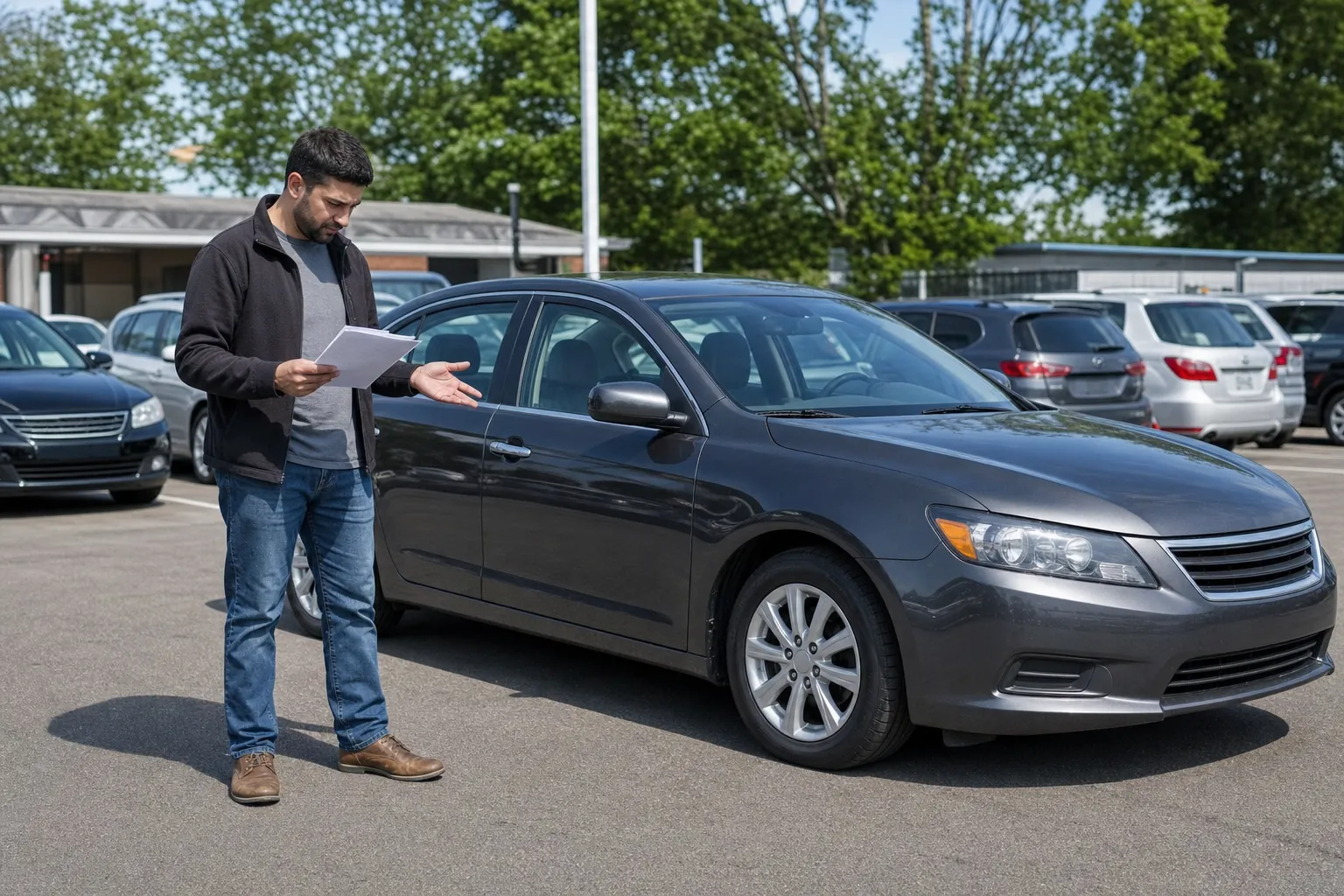
A used vehicle can look great in photos and still leave you with important unanswered questions. The goal is not to interrogate the seller or turn every conversation into a dispute. It is to understand the vehicle, the paperwork, and the deal well enough to make a calm decision.
Good questions work because they slow the process down. They move the conversation from vague assurances to details you can verify: records, title information, inspection access, tire condition, warning lights, recent repairs, and the total cost of the purchase. The answers do not have to be perfect. They do have to make sense together.
Bring this guide to a dealer, private seller, or used-car lot. Take notes, ask follow-up questions when something is unclear, and give yourself permission to pause. A vehicle that is truly worth buying will still be worth understanding.
Start by asking why the vehicle is for sale
This is not a trick question. It is an opening that lets you compare the seller's explanation with the rest of the vehicle's story. A private seller may be moving, reducing the number of cars in the household, or replacing an older vehicle. A dealer may have taken the car in on trade, bought it at auction, or received it from a fleet. None of those answers automatically makes the car better or worse.
What matters is whether the answer stays consistent. If the seller says the vehicle was carefully maintained, ask where it was serviced and whether records are available. If they say it was barely used, compare that claim with the mileage, tire age, interior wear, and title history. If they say there are no known problems, ask what was repaired most recently and why.
A helpful first set of questions includes:
- Why are you selling this vehicle?
- How long have you owned it, and how was it used?
- Who normally drove it, and where was it primarily driven?
- What repairs or maintenance have been done in the last year?
- Is there anything you would want to fix before keeping it another year?
You are listening for detail, not a polished speech. Someone who can explain how the car has been used and cared for gives you a stronger starting point than someone who only repeats that it runs great.
Ask how the vehicle was driven and stored
Mileage matters, but the type of miles matters too. A car used for a steady highway commute may have a different wear pattern than one used for short trips, towing, deliveries, or repeated stop-and-go driving. Ask where the vehicle spent most of its time, whether it was garaged, and whether it sat unused for long stretches. You are not trying to eliminate every possibility. You are trying to understand the life the car has already lived.
Long periods of sitting can affect batteries, tires, brakes, seals, fluids, and even wiring. Heavy use can bring a different set of concerns. A vehicle that towed, carried work equipment, or drove on rough roads may need closer attention to brakes, suspension, tires, and drivetrain components. An honest answer lets your inspector look in the right places.
These questions help fill in the gaps:
- Was the vehicle mainly used for commuting, family trips, work, or towing?
- Was it normally parked in a garage, driveway, or outdoors?
- Has it sat for more than a few months without regular driving?
- Has it been driven in areas with severe winter weather, flooding, or salty roads?
- Has it towed a trailer or regularly carried heavy cargo?
Answers are most useful when they line up with what you see. A claimed garage-kept car should not have a damp interior or unexplained corrosion. A low-mileage car that sat for years deserves the same careful inspection as a higher-mileage daily driver.
Ask about the title, vehicle history, and damage
Before you get attached to the vehicle, make sure its ownership story is clear. Ask to see the title and compare the vehicle identification number, or VIN, on the title with the VIN on the vehicle. Ask whether the title is in the seller's name, whether there is a lien, and whether the vehicle has ever been declared salvage, rebuilt, flood-damaged, or otherwise branded. A seller who cannot clearly explain the title situation is a reason to slow down.
Ask directly about accidents, body repairs, flood exposure, and airbag deployment. A repaired accident does not automatically disqualify a vehicle. The important questions are how serious it was, whether repairs were documented, and whether the condition now matches the story. Look for uneven panel gaps, paint that does not match, moisture in lights, or a steering wheel that does not sit straight on a level road.
Use a history report as one part of your homework, not as a substitute for looking at the car. The U.S. Department of Justice's National Motor Vehicle Title Information System explains how consumers can check title, brand, and related vehicle-history information through approved providers. The report may uncover useful records, but it cannot promise that every repair or problem was reported.

Ask for maintenance records and upcoming repair needs
Service records are often more useful than a verbal promise that the car was maintained. Ask for invoices, dealer printouts, or a service history that shows oil changes, tires, brakes, batteries, fluid services, and any larger work. A tidy folder is nice, but you are looking for a believable pattern over time.
Use the records to ask practical questions. Has the vehicle had work related to the engine, transmission, cooling system, suspension, or electrical system? Are there recurring repairs? Has a major scheduled service been completed, or is it approaching? If the seller does not know, that does not mean the deal is over. It means you should price the uncertainty into your decision and rely more heavily on an inspection.
Ask these questions before you make an offer:
- Do you have service records or repair invoices I can review?
- When were the oil, tires, brakes, battery, and fluids last serviced?
- Has the vehicle had any major mechanical repair or replacement?
- What maintenance will be due soon based on the age and mileage?
- Are there any warning lights, noises, leaks, or issues that come and go?
Ask for the answer in context. A new battery or fresh tires can be valuable. They should not distract from worn brakes, a transmission concern, or a history the seller cannot explain. For help judging the odometer alongside maintenance and condition, read what good mileage looks like on a used car.
Ask what has been checked before the vehicle was listed
At a dealership, ask what inspection or reconditioning was completed before the vehicle was offered for sale. Some dealers do thorough work, while others prepare a vehicle mainly for presentation. Ask for the inspection report if one exists, and ask which items were repaired, replaced, or left as-is. A clear answer gives you facts to compare against your own inspection.
For a private sale, ask whether the vehicle has recently been inspected and whether the seller will share the report. State safety or emissions inspections can be useful, but they are not the same as a comprehensive pre-purchase inspection. They are limited checks, completed at a particular time, and they do not erase the value of having your own mechanic look at the vehicle.
The Federal Trade Commission's used-car buying guidance recommends getting an independent inspection before you buy. Ask the seller or dealer early: “May I have the vehicle inspected by a shop of my choice before I sign?” The response matters. A reasonable process and a reasonable time frame are not a burden. They are part of making an informed purchase.
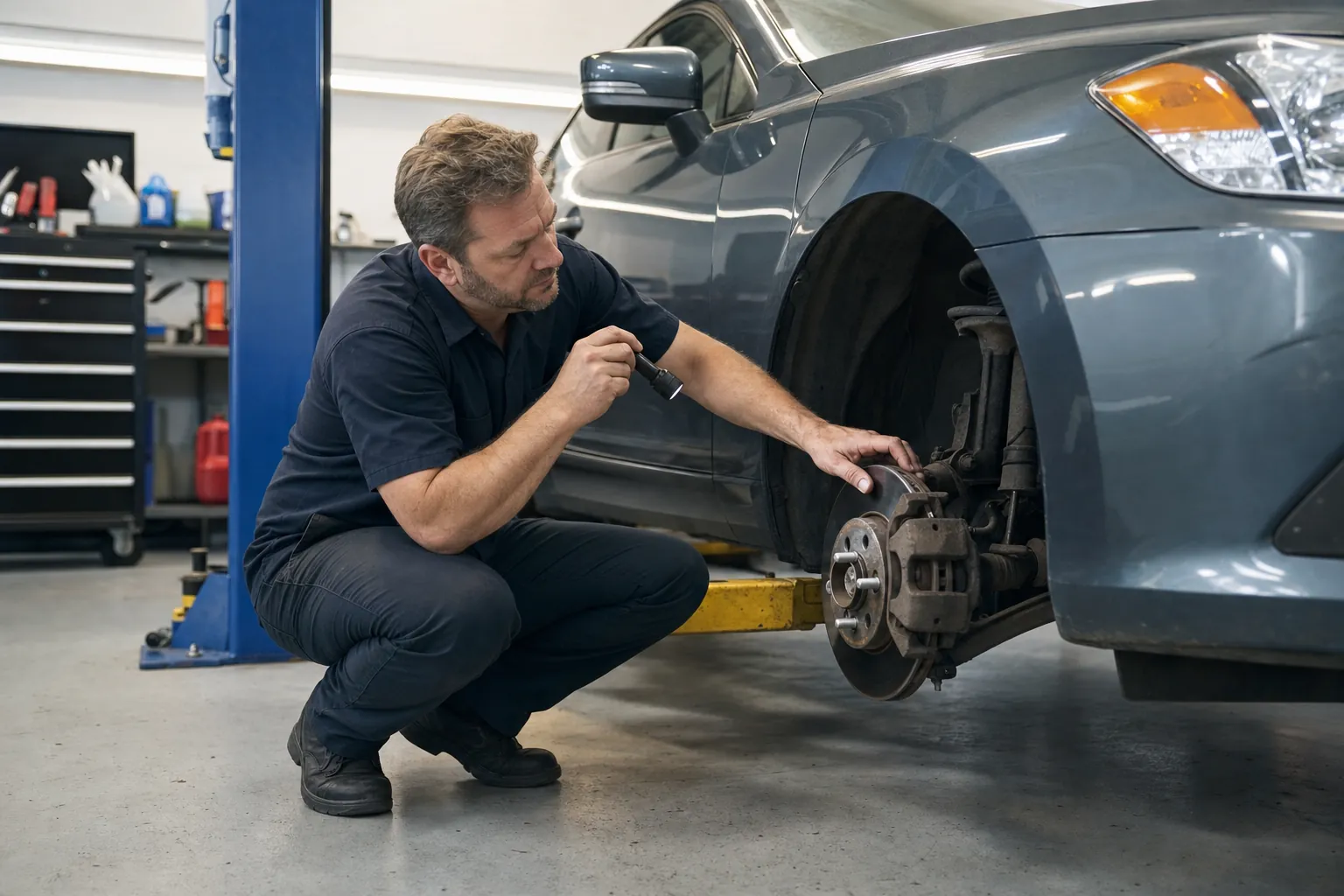
Ask about tires, brakes, and wear you can see
Wear items are easy to underestimate because they do not sound dramatic. They still affect the real value of the car. Ask the age and condition of the tires, whether they are all the same brand and size, and whether they have worn evenly. Mismatched tires or uneven wear can point to a simple replacement need, but they can also lead to questions about alignment, suspension, or past damage.
Ask when the brakes were last serviced and whether the vehicle has any vibration, noise, or pulling under braking. Look at the wheels for damage, inspect the tread, and check the spare tire and tools when they matter to you. Inside the car, work through the things that are difficult or expensive to repair later: climate controls, power seats, windows, locks, cameras, lights, charging ports, and safety features.
A useful way to ask is, “What will this vehicle need in the next six to twelve months?” The seller may not know every answer, but the question makes the conversation more concrete. Combine that answer with the inspection report and your own observations. You are not trying to make a used car look new. You are deciding whether the remaining work is understood and fairly reflected in the price.
Ask the questions that make a test drive useful
A test drive should answer more than whether you like the seat and the radio. Before you leave, ask whether the vehicle has been driven recently, whether it is cold, and whether there are any known quirks. A cold start can reveal noises or warning lights that are easier to miss after the engine has warmed up. Ask if you can drive long enough to experience normal acceleration, braking, steering, road noise, and parking-lot maneuvering.
During the drive, turn off the music for a few minutes. Listen for rattles, clunks, squeaks, wind noise, and changes in engine sound. Check whether the vehicle tracks straight, brakes smoothly, shifts normally, and responds predictably. Try the heat, air conditioning, windows, locks, cameras, lights, seat controls, and other features that matter to you.
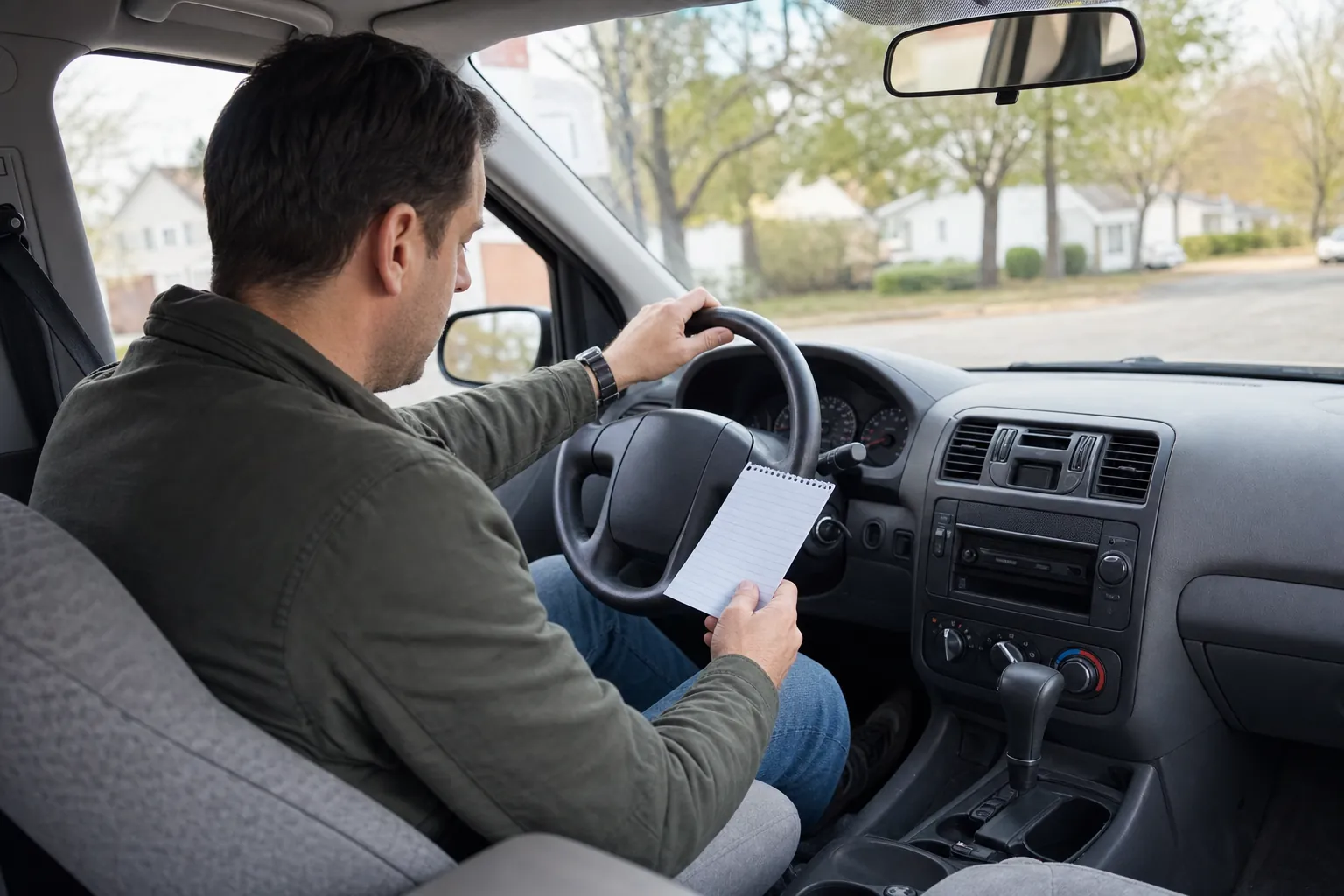
After the drive, ask:
- Did you notice anything during the drive that I should know about?
- Have any dashboard lights appeared recently, even if they are off now?
- Does every key, remote, and feature work as expected?
- Are the tires the same brand and age, and have they worn evenly?
- Has the vehicle ever pulled, vibrated, overheated, stalled, or needed fluid added between services?
You do not need to diagnose the vehicle from the driver's seat. You are looking for clues that deserve a closer look. Write them down while they are fresh, then give that list to the shop that performs the pre-purchase inspection.
Ask about recalls and safety repairs before you sign
Ask for the VIN and check it yourself for open safety recalls. The National Highway Traffic Safety Administration provides a free VIN recall lookup for eligible vehicles. An open recall does not necessarily end the deal, but it should be understood. Ask whether the remedy is available, whether the repair has been scheduled, and whether it can be completed before delivery.
Also ask about tires, brakes, airbags, lights, seat belts, and driver-assistance features. A used car does not need to be flawless, but basic safety items should not be brushed aside as somebody else's problem. If a seller tells you a light is harmless, a tire can wait, or a warning is normal, ask for a written inspection result instead of accepting a casual answer.
Ask for the full price, not just a payment
The advertised price is only the beginning of the conversation. Ask for the out-the-door price in writing. That is the total before you agree to buy, including the vehicle price, taxes, title and registration charges, dealer fees, and any products added to the deal. If you are financing, ask for the term, annual percentage rate, amount financed, payment, total of payments, and whether any optional products have been included.
A lower monthly payment can come from a longer loan, a larger down payment, or changes elsewhere in the deal. It is not automatically a better deal. The Consumer Financial Protection Bureau's auto loan resources explain the parts of an auto loan that buyers should compare. Take the offer home if you need to. A clear seller will still be able to explain the numbers tomorrow.
Use these price questions:
- What is the complete out-the-door price?
- Which fees are required, and which products are optional?
- Can I see the buyer's order or itemized deal sheet before I sign?
- What changes if I arrange financing through my own bank or credit union?
- How does my trade-in value affect the rest of the deal?
Keep the vehicle price, financing, trade-in, and optional products separate as long as you can. It is easier to see a fair deal when every moving part has its own number.
Ask what warranty or return promise is actually included
Do not rely on a phrase like “certified,” “covered,” or “we stand behind it” without asking what it means in writing. Ask whether the vehicle is being sold as-is, whether there is a dealer warranty, what components are covered, how long coverage lasts, whether there is a deductible, and where repairs must be completed. A short warranty can still be useful, but only when you know what it covers and what it does not.
If a dealer offers a service contract or extended warranty, ask whether it is optional, what the total cost is, what exclusions apply, and whether you can review the agreement before adding it to the deal. It may be a sensible choice in some situations. It should never be a surprise line added while you are focused on the monthly payment. The same is true for appearance products, theft products, and other extras.
For a private-party sale, be especially clear that you are generally buying the vehicle based on its current condition. That makes a history report, test drive, title review, and independent inspection more important, not less. If a seller makes a promise about a repair or included item, get the exact promise in writing before money changes hands.
Ask the questions that fit a private-party sale
Private sales can offer a simpler conversation, but the buyer usually has fewer protections and fewer places to go if a problem appears later. Make sure the person selling the car is the person on the title. Ask whether there is a loan payoff, whether the title is ready to transfer, and whether the seller will meet at the bank or motor vehicle office if needed. Do not hand over money because a story sounds urgent.
Ask whether you can see the vehicle at the seller's address, review the title before payment, verify the VIN, and take the vehicle for an inspection. Avoid deposits until you understand what they secure, whether they are refundable, and what happens if the inspection finds a significant problem. A buyer who keeps the process transparent is much easier to trust than one who creates urgency around a detail you cannot verify.
Talk It Through With Bill
Have a used vehicle or offer in front of you?
Bill Flower brings more than 33 years of dealership experience to the questions that come up before you sign. Bring the listing, records, offer, and concerns to a free consultation.
Write down answers and compare the whole story
When you are excited about a vehicle, it is easy to remember the reassuring answers and forget the unanswered ones. Use a simple note on your phone or paper to keep the same categories for every car: price, mileage, title, history, service records, tires, brakes, test-drive concerns, inspection findings, recalls, financing, and expected near-term work. That makes a second or third vehicle easier to compare fairly.
Do not let one positive detail erase a concern somewhere else. A low-mileage vehicle can still need expensive work. A clean history report can still miss a mechanical problem. A friendly seller can still have incomplete records. The best used-car decision comes from several sources agreeing with one another: the seller's answers, the documents, your test drive, and an independent inspection.
When an answer is vague, you do not have to accuse anyone of hiding something. Ask for a record, ask for time to verify it, or ask the inspector to focus on that area. A good vehicle can withstand sensible questions. If a deal only works when you ignore your own concerns, it is not a deal you need to chase.
Put your questions in the right order
You do not have to ask every question at once. Start with the vehicle's history, title, condition, and records. Then drive it, arrange an independent inspection, and review the full price. That sequence keeps excitement from getting ahead of the facts.
It also gives you a clean way to step away from pressure. When a seller asks for a decision before you have the title details, an inspection, or an itemized price, you can simply say what is still missing. A clear process protects your time and makes it easier to recognize when a vehicle deserves another look, a lower offer, or a polite no.
Keep copies of the listing, the vehicle history information, inspection notes, and the written deal together. If a detail changes later, you will have a record of the question you asked and the answer you were given.
The best outcome is not always buying the first car you see. It is knowing why a particular vehicle makes sense for your needs, budget, and comfort level. The Vehicle Buying Guide can help you organize your research, and Bill's one-to-one approach is there when the offer, vehicle, or next move needs another set of experienced eyes.
Frequently asked questions
What are the most important questions to ask when buying a used car?
Start with the title and vehicle history, accidents or damage, service records, open recalls, current condition, recent repairs, known problems, inspection access, and the full out-the-door price. The answers matter most when they are supported by records, an inspection, and what you see on the test drive.
Should I ask for service records before buying a used car?
Yes. Service records can show whether routine work and major maintenance were handled on time. They will not make the vehicle perfect, but they help you identify gaps, upcoming work, and whether the seller's story matches the care the vehicle received.
Can I ask for an independent inspection before buying a used car?
Yes. A reasonable seller or dealer should allow an independent pre-purchase inspection. The inspection can uncover wear, leaks, repairs, warning codes, or safety concerns that are hard to judge from a listing and a short drive.
What should I ask about the price of a used car?
Ask for the out-the-door price, what is included, what fees are added, whether any products are optional, and how the numbers change with financing or a trade-in. Compare the total deal, not only the vehicle's advertised price or monthly payment.
Related posts
Used Car Buying
What Is Good Mileage for a Used Car?
See how mileage fits into maintenance, condition, records, and the real cost of ownership.
Read the guide →