
Buying a used car from a private seller can give you more direct answers about how the vehicle has been used. It can also leave you without the dealership process that normally handles the title, trade-in, financing paperwork, and delivery details. That is not a reason to avoid every private sale. It is a reason to slow down and make each part of the transaction earn your confidence.
Start with the same discipline you would bring to any used vehicle: compare the listing with the car, check the ownership story, inspect it, drive it, and make room for an independent opinion. Then give the paperwork and payment the same attention you give the paint and mileage. A clean-looking car is not enough if the title is unclear, the VIN does not match, or the seller cannot explain what happens next.
Know what a private sale changes
In a private sale, there is usually no dealer preparing a buyer's order, registering the car for you, or providing a warranty required by dealer rules. The seller may be perfectly honest, but the transaction is still more dependent on the two of you getting the details right. Your state's title, tax, registration, insurance, and bill-of-sale rules control the final steps, and those rules can differ widely.
That makes the sequence important. Do not begin with a deposit because the vehicle seems scarce. Begin with proof: the listing, the seller's name, the title, the VIN, service records, the current mileage, and a clear agreement that you can inspect and test drive the vehicle. A seller who has a straightforward story and a real reason for selling should not need you to skip basic safeguards.
A private sale also changes how you judge value. There may be no dealer fee, but there may be immediate tire, brake, battery, suspension, or registration costs. Compare the asking price with the condition you can verify, not with the best-case version of the car in your head. The used-car mileage guide can help you put the odometer in context before you decide a lower price is automatically a better deal.
Confirm the seller has the right to sell the car
Before you travel far or negotiate hard, ask to see the title and compare it with the seller's identification where appropriate. The name on the title should make sense with the person selling the car. The vehicle identification number on the title should match the VIN visible on the vehicle, commonly at the lower windshield on the driver's side and on the driver's door-jamb label. A mismatch is not a small paperwork typo to solve after payment. It is a reason to pause.
Ask whether there is a loan, lien, lease payoff, or another owner involved. A seller may still be able to complete a legitimate sale when a lender holds the title, but the payoff process needs to be clear before you hand over money. Ask which lender is involved, how the payoff will be handled, and when you will receive the title or lien release. Do not accept a promise that the seller will sort it out after you pay in full.
The U.S. Department of Justice's National Motor Vehicle Title Information System explains how shoppers can access approved title and certain history information. Use that record as one piece of the picture, alongside the title in front of you, not as permission to ignore something that does not add up in person.

Build the evidence before the test drive
Ask the seller for the VIN, maintenance records, repair invoices, and a plain explanation of any accident damage, warning light, major repair, or period when the car was not being driven. You are not looking for a perfect vehicle. You are looking for a story that is consistent. A well-maintained car may still have normal wear. A vehicle with few records may still be worth considering. The important part is that the price, condition, and unanswered questions line up honestly.
Run the VIN through the National Highway Traffic Safety Administration's recall lookup. Open recalls do not automatically end a purchase, but they should be part of the conversation. Ask whether the repair was completed or whether it can be completed promptly. If the seller says they did not know about a recall, that may be true. You still need to know what it means for the car you are considering.
Bring the right used-car questions with you. Ask why the car is being sold, how it has been used, what has recently been repaired, what does not work, whether there are extra keys, and whether the seller will allow an inspection. Write down the answers. A note taken at the car is more useful than a vague impression after you have driven home excited about the price.
Inspect the car as if the next repair is yours
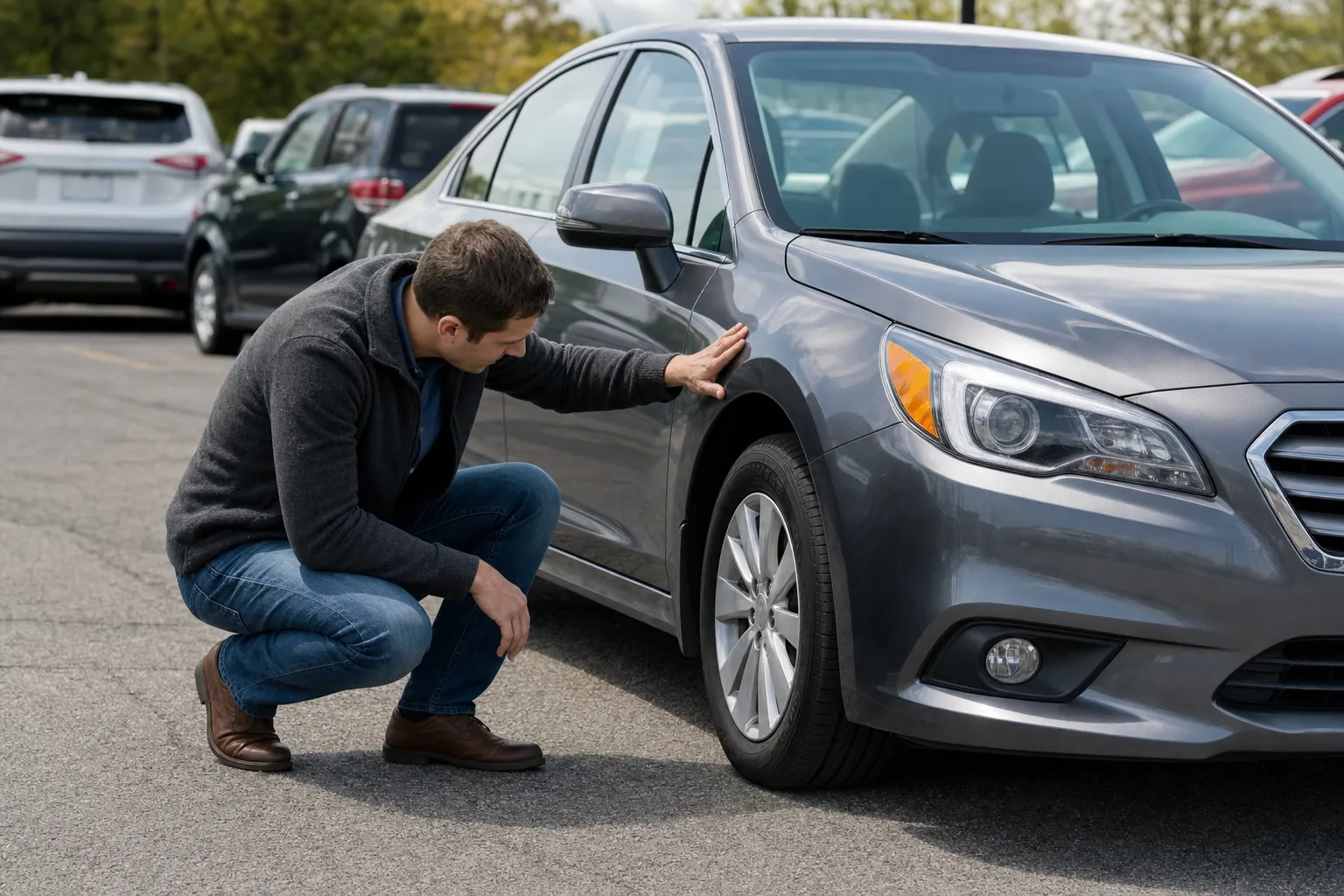
Walk around the car in daylight when possible. Look at panel gaps, paint changes, rust, windshield damage, uneven tire wear, fluid leaks, lights, and the condition of the interior. Look under the floor mats and in the trunk for moisture, corrosion, or a mildew smell. Check that the features you care about work: windows, climate control, locks, camera, lights, charging ports, and warning messages.
Pay attention to the tires. They are expensive, visible, and often tell you more than a seller realizes. Uneven wear can point to alignment, suspension, or steering concerns. A tire with low tread can be a normal maintenance item, but it belongs in the real cost of ownership. The used-car inspection checklist gives you a fuller walk-around sequence, including paperwork, body condition, water damage clues, recalls, and price details.

Drive it on a route that reveals something
Do not let the seller choose a two-minute loop that only proves the car can move. Start it cold if possible, listen with the radio off, use the controls while parked, and drive on ordinary streets, turns, rougher pavement, and a safe higher-speed stretch. Notice whether it starts cleanly, idles smoothly, tracks straight, shifts predictably, brakes without pulling, and stays free of new warning lights or unusual smells.
You do not have to diagnose every noise from the driver's seat. You do need to decide whether the car deserves the next step. A vibration under braking, a clunk over a bump, a harsh shift, a fuel smell, or a warning light can all be useful information for an inspection shop. The used-car test-drive checklist can help you take notes that are specific enough to follow up on.
Then compare the condition with the asking price. A private seller may be offering a fair price because they want a simple sale. They may also be pricing in a repair they do not want to make. Neither explanation is a problem when the facts are clear. The risk begins when a price feels tempting enough to make you excuse details you would not accept on another vehicle.
Get an independent pre-purchase inspection
A pre-purchase inspection is where a promising vehicle gets a more honest review. Choose the shop yourself, ask what the inspection covers, and make sure the seller understands that you are not committing until you have the result. A qualified mechanic can look at the underbody, tires, brakes, fluids, suspension, signs of collision repair, diagnostic codes, and maintenance needs that a driveway conversation cannot settle.
The Federal Trade Commission recommends arranging an independent inspection before purchase. Bring your test-drive notes and ask the shop to focus on what you noticed. If the seller refuses to allow an inspection, treats the request as an insult, or only allows a shop they chose, consider that useful information. You are not asking for a favor. You are deciding whether to take on a vehicle and its future repairs.

Agree on the money and documents before the handoff
Once the vehicle passes your checks, put the final terms in one place. Confirm the exact purchase price, who pays any required taxes or registration costs, the payment method, the handoff location, and which documents will change hands. Your state may require a signed title, a bill of sale, a release of liability, an odometer statement, notarization, or other forms. Check the rules with your state motor vehicle agency before you meet, not while the seller is waiting with the keys.
Choose a payment method that gives both sides a clear record and fits the amount involved. A bank cashier's check or bank-facilitated transfer may be appropriate, but confirm the seller's needs and your bank's process ahead of time. Avoid sending a deposit through a payment app, wire, gift card, or cryptocurrency just because someone says another buyer is waiting. Do not pay for a car you have not seen, inspected, and matched to the title.
Meet in a public, practical location when possible, especially if the transaction involves a larger payment. Before the final handoff, compare the title, VIN, mileage, keys, promised records, and signed paperwork one more time. Arrange insurance before driving away, and make sure you understand how the vehicle will be legally moved, registered, or stored if the paperwork cannot be completed that day.
Private-sale paperwork is not where you want surprises. The extra ten minutes spent checking each number and signature is easier than trying to correct a title issue after the seller has your money and the car is in your driveway.
Know when to walk away
Walk away when the title does not match the seller, the VIN does not match the car, the seller cannot explain a lien, the vehicle is not available for an inspection, the price keeps changing, or the seller pressures you to pay before seeing the documents. The same goes for a seller who wants to meet only at night, refuses a normal test drive, or asks for irreversible payment before you have verified the vehicle.
Walking away does not mean you have accused someone of wrongdoing. It means the purchase has not met your standard for a decision that will affect your budget and transportation. There will be other cars. It is much easier to lose an opportunity than to untangle a car you never should have bought.
Bring the real details to Bill before you decide
Bill Flower brings more than 33 years of dealership experience to the details that often get blurred in a private transaction. The listing, title, vehicle history, inspection report, repair estimate, and payment plan each tell part of the story. Looking at them together can make the best next move easier to see.
If you have a private-sale vehicle in front of you, the Used Car Buying Service and a free consultation give you a direct way to talk through the vehicle, the paperwork, and the open questions before your decision becomes final.
Before You Pay
Have a private-sale car in mind?
Bring the listing, title details, inspection findings, and asking price to a free consultation with Bill.
Frequently asked questions
What should I ask a private seller before buying a used car?
Ask why they are selling, how long they have owned it, whether they hold the title, whether there is a loan or lien, what maintenance and repairs have been done, whether it has been in a crash, and whether they will allow an independent inspection. Then compare those answers with the title, VIN, records, history report, and what you see in person.
How do I pay for a used car from a private seller?
Agree on the price and required documents before moving money. A bank cashier's check or a bank-facilitated transfer can create a clearer record than cash, but the right method depends on the amount and your bank. Do not send a deposit, payment-app transfer, or wire based only on an online listing or a promise that the title will follow later.
Do I need a bill of sale for a private car sale?
A bill of sale is useful because it records the vehicle, price, date, buyer, seller, and any stated condition. Some states require it for certain transactions, while others handle the ownership transfer through the signed title and state forms. Check your state motor vehicle agency before the handoff so you know what must be signed, notarized, or taken to the registration office.
Can I buy a used car from a private seller without an inspection?
You can, but it leaves you relying heavily on appearances and the seller's description. A test drive and history report are useful, yet neither can examine the underbody, diagnostic codes, hidden leaks, collision repairs, or soon-to-be-needed maintenance the way an independent pre-purchase inspection can.
Related posts
Used Car Buying
Used Car Inspection Checklist: What to Check First
Use a practical inspection sequence before you commit to a used vehicle.
Read the guide →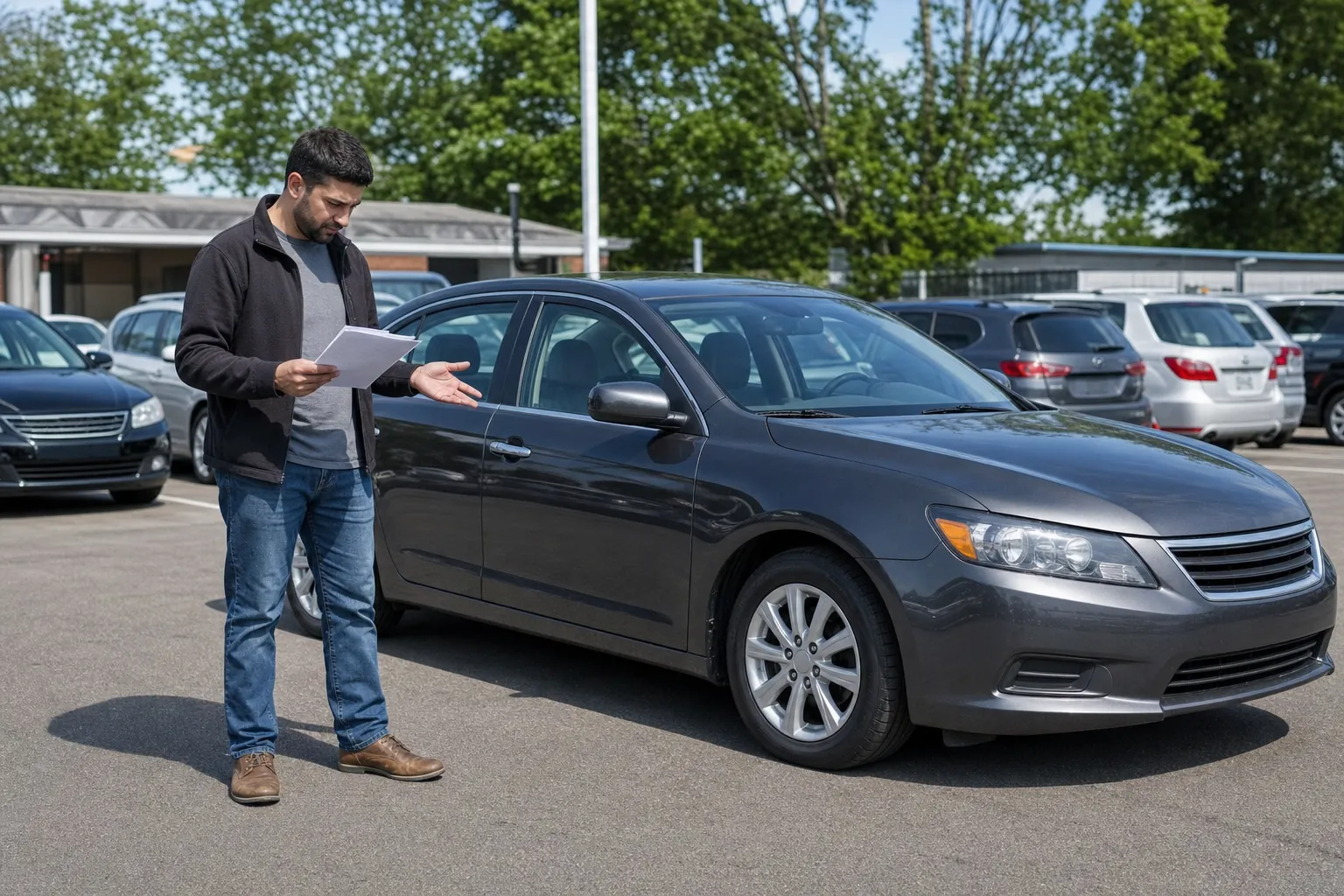
Used Car Buying
Questions to Ask When Buying a Used Car
Bring better questions to the seller, dealer, test drive, and inspection.
Read the guide →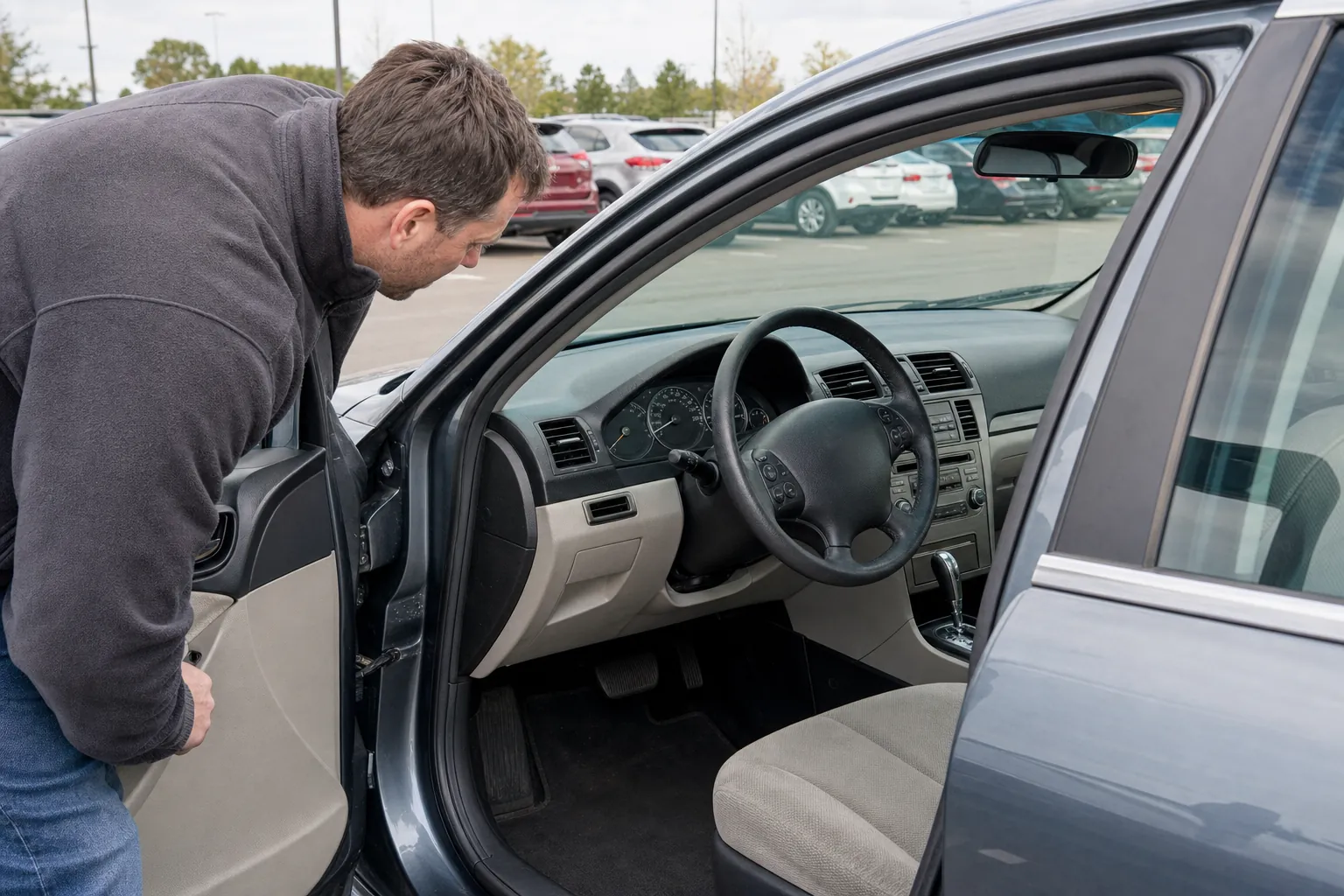
Used Car Buying
What Is Good Mileage for a Used Car?
See how mileage fits into maintenance, condition, records, and ownership cost.
Read the guide →